注册一亩三分地论坛,查看更多干货!
您需要 登录 才可以下载或查看附件。没有帐号?注册账号 
x
本帖最后由 AthenaX 于 2020-3-25 16:18 编辑
. ----
新人求米~~~ 需要大米看其他板块!
因为最开始就是用英文写的,而且已经特别长了,所以就不翻译了。不知道地里对英文的内容有没有规矩,如果违反了就删帖。
疫情期间找工作心得.--
Job Hunting During A Pandemic: Resilience and Creativity
Right now is an incredibly challenging time for job seekers. Some companies freeze their hiring, some cancel internships, some postpone in-person interviews, some move to virtual interview, and some still figuring out their hiring plan. Self-quarantine, news, social media are already psychologically draining to deal with. Looking for jobs adds even more uncertainties and complexities.
As someone who has been through the process recently, I want to share what've helped me and what I wish I knew. I also hope to inspire audience to see challenges in a positive light and use resilience and creativity to turn sour lemons into lemonade.
Before I start, I want to first say that I feel frivolous to talk about job hunting and career right now. The utmost important priority is public health, which I barely contribute to. My absolute respect goes to clinicians, hospitals, volunteers, organizations, and anyone who takes risk in devoting themselves to saving lives on the frontlines.
Resilience
1. First and foremost, take care of yourself!
If there is one takeaway I hope you get from this blog, it is: your safety, physical and mental health are the most important at all times. It's easy to remain safe and healthy physically as long as you stay at home. However, mental health issues can be lurking in the dark, when you are busy dealing with uncertainties in the job market, feel frustrated by the news on social media, develop cabin fever for staying at home for too long, while at the same time getting rejections and slow or no response.
.
To navigate through this complicated situation, you need a solid foundation to remain optimistic and resilient. You need to build a good daily routine, derive joy from activities you always enjoy doing, and create emotional capacity to process feelings and get hold of yourself.
Everyone derives happiness in their own ways. So before thinking about job hunting, make sure you have a customized self-care plan in place first. Eat healthy, sleep well, exercise regularly, get connected with friends and family, do your favorite activities, and remain optimistic. These sounds cliche, but they become difficult to maintain and easy to forget when you get frustrated during job hunting. Regularly check in with yourself and reflect on whether you are leading a balanced and healthy life at the moment..--
. Χ
2. Deal with uncertainty
A lot of changes are happening right now, especially the company's hiring plan. You can of course reach out to company employees to ask whether hiring plan has changed, but there will surely be things you don't know the answer about. It takes up a lot of mental power to constantly worry about uncertainty, or to get frustrated by the unknown. Therefore, you need to learn to deal with these uncomfortable feelings.
a) Carve out certainty from uncertainty
I maintain an interview prep routine that gives me a sense of control and certainty. I use Asana to manage all my tasks, and I have a section of recurring tasks I'll do no matter what: Daily Product Case Practice, Daily Mock Interview(which I didn’t do unfortunately), Daily Reading(of interview prep books), Daily Writing(of product case bullet points), Weekly Resume and LinkedIn Polish, etc. I know these tasks are what I can control and I will need to do them no matter how the situation changes.
b) Celebrate small wins, not just final success. 1point 3 acres
Given how volatile the current job market is, you don't want to measure your success only by how many offers you get, and treat rejections as the opposite of success. That way your job hunting will be miserable, because it takes so much effort to succeed in that model, and every small mistake destroys it. Rather, you should celebrate whenever you fill in an application, reach out to someone, schedule the call with a company employee, do a mock interview, etc.
All these tasks are a steady supply of small wins every day. When I mark a task done in Asana, Asana will give me a unicorn emoji. It's a tiny reward, but it makes me feel I make consistent progress towards my goals under the ever-changing circumstances.. .и
c) Replace uncertain outcomes with positive outcomes
When I got the email that my flight tickets were canceled and onsite interviews went virtual, and then another email later that my 4 onsite interviews now became 3, a voice at the back of my head was whispering:
It doesn't matter how well I do in the final round interviews. The company is going to freeze hiring any way. After all, when all employees are working from home, how can they onboard new hire?
While this situation is certainly possible, it's not helpful for my interview prep or actual interviews. So I started to get curious and analyzed this scary thought. It may have some legitimacy, but if I see it from the other angle, it means that I shouldn't take the rejection too personally. After all, one million things can go wrong under current circumstances. Since I won't know what factors lead to the rejection, I will just give myself the benefit of doubt. Note that I am not saying you shouldn't improve your interview performance. Rather, it's just a mental framework to deal with uncertainties.
. ----
d) Reframe negative self-talk into a healthy narrative
We all have those moments of rejections. When you get another rejection, you feel: oh dear, another company just rejected me. I must suck. And then a few other rejection moments come to mind, and you are trapped in an downward spiral of existential crisis.. 1point 3acres
When you first experience these feelings, don't resist them. Instead, let them sink in. Be curious about their effects on you and watch how they affect your body. Do you hold your breath? Do you feel clogged in the chest? Observe, but don't judge. Allow them to happen, but don't engage with them. Don't fight to surpass them. Don't try to argue with them. Don't feel bad for feeling bad. If you let them flow through your body, they will fade in time. After all, when was the last time you felt furious? Can you still feel the anger right now? Probably not. They went away.. ----
Once I calm myself down from the flow of emotions, I will think, what a pity that this company loses a great talent! If only they get to know me more! Note that I don't challenge my self-worth. Rather, I question whether I successfully show my value and whether I am properly accessed. (I am not saying that you shouldn't analyze your interview performance and improve upon them. It's just a mental framework to get yourself back on the feet.) After all, you are the only person who has the final say in your value, because only you spend 24/7 with yourself, and your self-worth goes way beyond your resume and interviews, which are just a piece of paper and a few hours.
. 1point3acres.com
When you come across a difficult interview question during the prep, instead of saying I am not smart enough to do this, or I can never do this, say, I am smart. If I find something hard, I must be growing very fast. This may sound a bit silly, but in the moment when you feel defeated, you really want to give positive reinforcement.
Creativity
3. Networking: Find "touch points"
While in-person interaction nowadays is impossible, networking online have never been easier, because: 1) people spend more time on social media than before, 2) people have more flexibility to take quick phone calls when working from home, 3) people are longing for authentic human connections, especially during the bad times, 4) helping others is very empowering when news make us feel helpless.
. From 1point 3acres bbs
When I am interested in a specific company, I will identify and create touch points with the company. By touch point I mean people and occasions to interact with people. I use the word touch because your interaction with a company can be many or few, short or long, shallow or deep. You want to create as many long and deep touch points within the company as possible.
-baidu 1point3acres
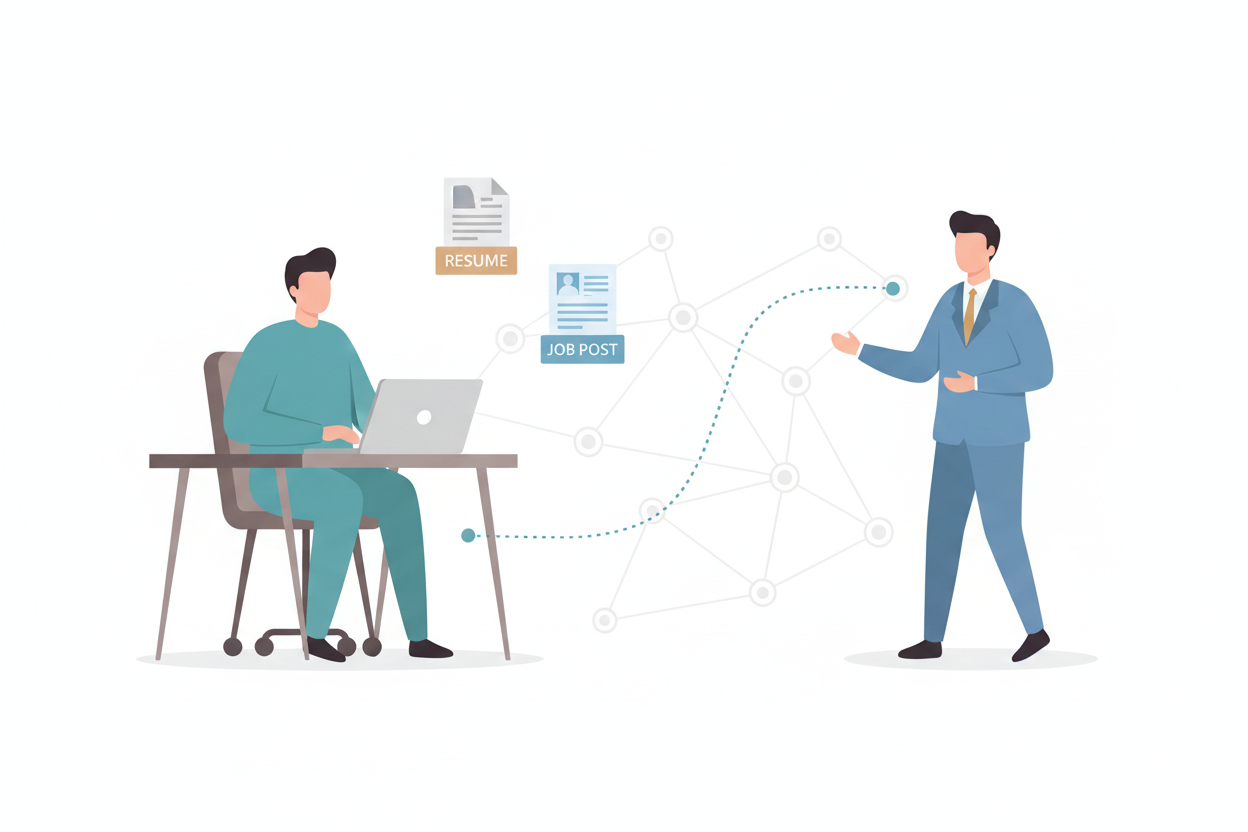
Connecting with recruiters during hiring events and career fairs is helpful, but because they deal with hundreds of, sometimes even, thousands of applications, your email can easily get lost. So you also want to connect with other employees who can reach out to recruiters on your behalf when you don’t hear back, and sometimes even advocate for you as a company employee.
My biggest networking mistake early on was to connect on LinkedIn with everyone I meet during an event, but take little efforts to engage with them afterwards. Then when I start to look for jobs, I find it very hard to ask someone who barely knows me to do something for me.
Just like when you make friends as a kid, you don't just ask each other's name and then all of sudden you are friends. You need to spend time with each other, talk about your favorite cartoon characters, share your truck toys, do mischievous tricks, play hide and seek, etc. Networking, by the end of the day, is just building relationship in the professional settings. Therefore, you need to find ways to deepen the engagement and strengthen the relationships.
Your interaction with the other person ranging by engagement from low to high can be: ask and answer questions, discuss a specific topic, jump on a call, meet over coffee, connect you with recruiters/hiring managers, give a referral, advocate for you, etc. Remember that the other person is taking his/her time to help you out, so you want to ask for small and quick things initially. Depending on how much chemistry you two have, and how willing he/she wants to help, you can gradually move towards more engaging activities.
The most common networking ways are: 1) reach out to your alumni, former colleagues, and mutual friends, 2) go to career fairs, networking events, conferences, 3) attend company events. Below are a few creative ways:
a) Online Communities
Online community is a fantastic way to network with a wide range of professionals in your field. It creates a semi-private, weak, but long-lasting relationships among all members, and you can activate some of relationships when necessary by private messaging, jumping on a call, etc. To maintain these relationships, you only need to stay in the community, post now and then, and engage with other posts, which takes much less effort than following up with each one individually.
..
When you contribute to communities, members will see your work, which is a better way to know you than from resume and phone calls. It also takes courage to put yourself out there, especially when you are early in your career, which shows your initiative and leadership. Don't think you cannot contribute if you are early in your career. Everyone has his/her unique life story and different perspectives. If you don't have much experience, you have plenty of time. Give back to the community, and you will be surprised by the serendipities that happen!
b) Blogs
Blogs is another fantastic way to showcase your talents, personality, and value. Basically you can blog about anything and it takes more efforts on you, but little efforts on others to get to know you as a person. It's also a good way to practice interview questions, as you structure your thoughts in writing.
-baidu 1point3acres
Blogs are also easy to share, so it can quickly grow out of your network and expand your audience base. Sometimes I also use my blogs as supplemental materials during my interviews. If I find myself unclear when explaining something, or run out of time during the interview, I will send the blog link right after.. check 1point3acres for more.
4. Establish Your Value Proposition
. From 1point 3acres bbsInterview, regardless of its formats, has one purpose: evaluate how much more value you bring to the company than how much you get paid. This translates to a different way of writing your resume and answering interview questions from what we are familiar with. Humans form memory chronologically. It takes you less efforts to say I did this, and then I did that, and then I did that, but you leave interviewers with the heavy lifting task of extracting information from your experiences and translating them to the actual work of the role. Rather, you want to organize the information into digestible small chunks of strong points that hit most points of responsibilities. Your answers should always alight what needs to be done, with what you have done before. If you haven't done anything like it before, find the underlying skills that enable you to do that and share how you have used the skills previously.
Also, you can think about how you can add value in the current situation. For example, I am interviewing for a team that works closely with non-profits. A company employee, recommended me to talk about how this team could better support non-profits during COVID-19. This is a brilliant idea. It can show my interests in the company, ability to think in the company’s interest, and problem-solving skills.
5. Video Interview
My biggest mistake in the job hunting is spending little time practicing video interviews. I read interview prep books, wrote down bullet points, and thought out loud to myself, but I conveniently avoided practicing over video because I felt uneasy in front of camera, which is exactly the sign I should practice it. I also feel the pressure to fill every second of the video chat, because once the other person is looking at me attentively, I feel I shouldn't waste him/her time. (Oh, dear, how I envy people who video chat with friends and family all the time!) If I could have done it differently, I would schedule a few long video chats with both friends and people who I am less familiar with..--
A feedback from one of my interviewers:
. ----
You did just fine. If I were to give you critical feedback, you could have been more relaxed and it seemed like you felt the need to fill time (i.e. more than a couple of seconds of quiet time and you were compelled to start speaking again). That said, we recognize the difficulty of an online interview so nobody counted that against you.
I should also get better at taking non-verbal cues over video, because something could be happening in the background, and my interviewers and I both need to adapt.
For example, during one of my interview, my interviewer had a lot going on at home: kids, woodwork, and pets. I didn't realize he wanted to change to another room and someone else was waiting to speak with him outside the camera until quite late. There is nothing complicated about this, as long as you experience different scenarios through practice, you will identify the cues easily.
6. Be persistent and push it through.google и
Waiting to hear back is probably the worst feeling to sit with, because human beings are never good at dealing with uncertainty. We would rather hear a bad news immediately, than constantly worrying about whether it's a good or bad news. Especially right now companies are busy adjusting to working from home, the response could take even longer.
.google иAgain, carve certainty out of uncertainty. While the final offer decision may involve various factors and shareholders, your interviewers' impression of you should be pretty straightforward and readily available. So, once I finished my final round of interview, I sent thank-you emails to my recruiter and interviewers and added them on LinkedIn. I messaged my interviewers:
It's nice speaking with you today! Thank you for all the thought-proving questions, especially the one about general approach to problem-solving. I want to write a blog to organize my thoughts and past experience. And thank you for sharing your answers.
On the other hand, I know virtual onsite interviews add a lot more noise to the recruiting process. It's harder to access personality and culture fit through video chat. I want to provide as much relevant information as possible. So I said:
I know video conferencing is quite different from in-person interview, especially for accessing personality and culture fit. Feel free to check my LinkedIn and blog below to know about me more.
Luckily, my interviewer replied I did pretty well and my interview review was positive. He also offered to push forward the recruiting process faster.
Another way to get updates is to go back to your touch points in the company. As soon as you finish the interviews, send thank you emails and LinkedIn messages to them. If you don't hear back about application update for some time, your numerous strong and deep touch points inside the company come in handy. You can ask whether they can reach out to the recruiter on your behalf. A lot of times when you don't hear back, it may have nothing to do with your performance. Especially in the big company, it's possible that HR are swamped by other priorities. That's why it's important to build strong relationships with multiple company employees. During the normal time, if they also don't hear back, they can go to HR office directly and push the process forward.
7. Negotiation
Levels.fyi is a good website to check salary based on level. The total compensation is nicely broken down to base, stock, and bonus. I am still doing interviews and about to start negotiation, so I will update this section as I go.
Below are 2 insightful articles I find from haseebq.com
Ten Rules for Negotiating a Job Offer
How Not to Bomb Your Offer Negotiation
Final Words
Please consider it's a win if you and your family survive the pandemic safe and sound, regardless of whether you get an offer. We are already much more fortunate than thousands of people who lost their lives or their family members. Being grateful for what we have can put things into perspective. ..
It's a hard time for job hunting. However, it's also a great opportunity to learn how to tackle challenges, solve problems creatively, be scrappy and resourceful, and remain optimistic and adaptable. Your future employer will appreciate your growth during this time!
|


















 狗仔卡
狗仔卡
 收藏
收藏 淘帖
淘帖 好苗
好苗 杂草
杂草
 提升卡
提升卡 置顶卡
置顶卡 关贴卡
关贴卡 开贴卡
开贴卡 变色卡
变色卡 千斤顶
千斤顶

 楼主
楼主